IoT and software
Offline-First Device Sync for Fleet Telematics
When cellular links drop, fleet devices must keep running. This article outlines a practical offline-first sync strategy that handles partitions and merges without data loss, covering local data modeling, conflict resolution, bandwidth-aware protocols, and production-ready verification patterns.
Why Offline Sync Matters in Fleet Telematics
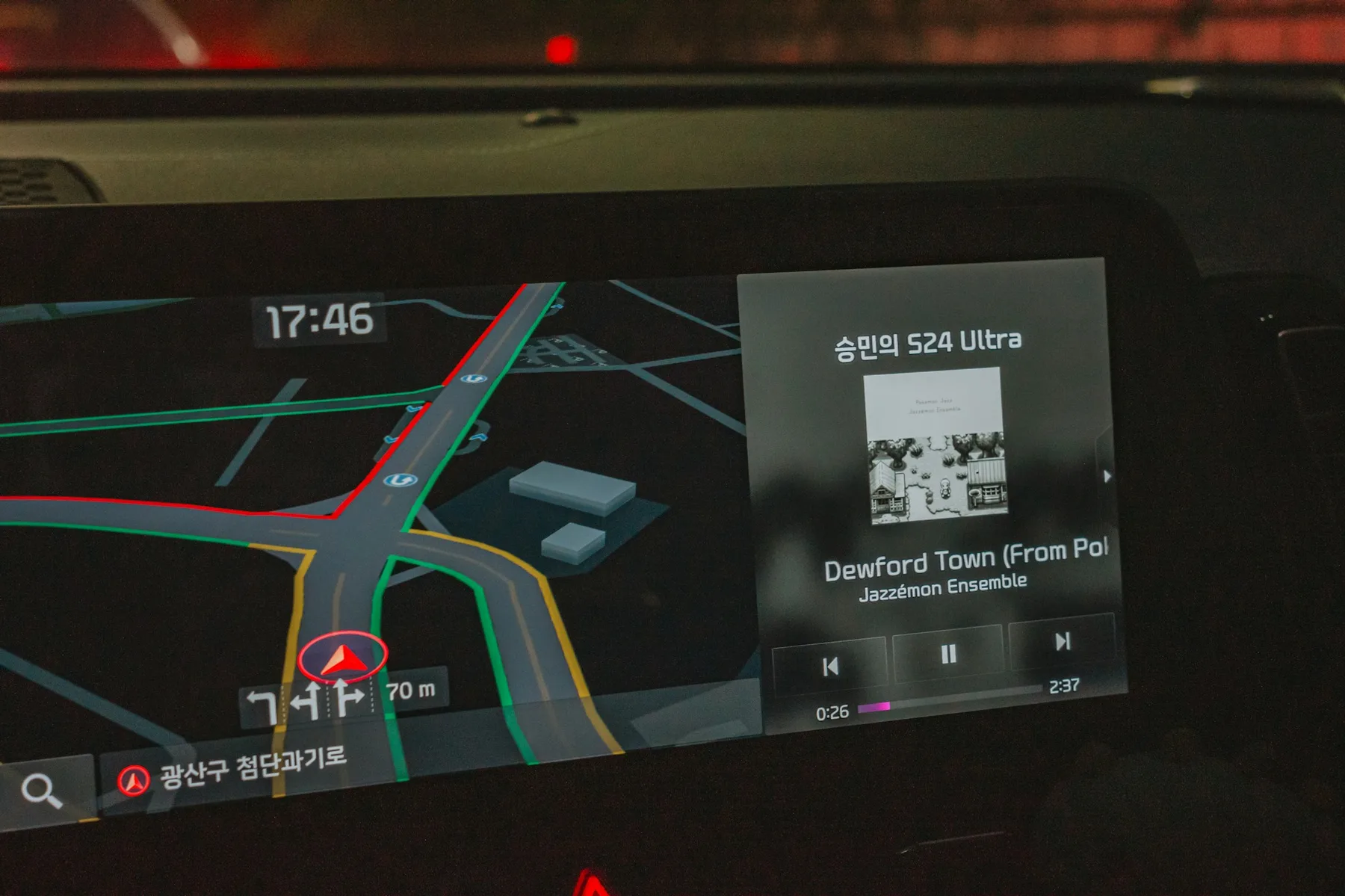
Fleet telematics systems depend on a continuous flow of location, engine diagnostics, and driver events from distributed devices to a central backend. In practice, cellular coverage is spotty: tunnels, rural routes, and urban canyons can interrupt connectivity for minutes or hours. When the link drops, devices must continue collecting data and executing commands. An offline-first sync strategy ensures that no telemetry is discarded, no scheduled maintenance is missed, and no safety-critical flag is lost simply because the network is unreachable.
The cost of a sync failure extends beyond missing logs. A device that stops reporting may trigger false fault codes, cause dispatchers to lose visibility of asset status, and lead to compliance violations if hours-of-service data cannot be transmitted. Designing for partition tolerance from the outset reduces mean time to repair, improves asset utilization, and keeps operators informed even when the network is silent.
This article outlines a pragmatic approach to offline sync that is vendor-neutral, technically accurate, and suited to the constraints of embedded telematics hardware—limited RAM, constrained storage, and intermittent power budgets.
Designing the Local Data Model for Partition Tolerance
A partition-tolerant local data model treats the device storage as a reliable log rather than a volatile cache. The core principle is write-anywhere, sync-later: every telemetry event, command acknowledgment, and diagnostic flag is stamped with a monotonically increasing local sequence number and a timestamp derived from a hardware real-time clock (RTC).
Data entities typically fall into three categories:
- State records (e.g., current location, engine temperature) that are overwritten by the most recent valid value.
- Event logs (e.g., hard braking, fault code triggers) that must be preserved in chronological order.
- Command queues (e.g., firmware update flags, payload release instructions) that may be retried multiple times.
To enable safe merges after a partition heals, each data entity should carry a version vector or a globally unique identifier (GUID) that survives device resets. Avoid relying on server-assigned IDs alone; embed a device-specific prefix to prevent collisions when multiple devices sync to the same backend shard. Storage layout should favor append-only buffers with periodic compaction, allowing the sync engine to traverse only the delta since the last successful exchange.
Conflict Resolution Strategies for the Merge Phase
When a device reconnects after operating independently, its local log will contain updates that the backend has also received from other sources. Conflict resolution must be deterministic, reproducible, and—when possible—automatic.
A common pattern in telematics is *last-write-wins* based on a hybrid logical clock that combines the device’s sequence number with the wall-clock timestamp. If two updates affect the same state record, the one with the higher logical timestamp prevails. This approach works well for location updates or sensor readings where recency is the primary concern.
For event logs and command queues, a *merge-by-identifier* strategy is safer. Each event carries a globally unique ID; during sync, the backend checks whether the ID already exists. If it does, the incoming event is discarded as a duplicate. If it does not, the event is appended. This avoids data loss from overwrites and ensures that a fault code triggered during a partition is not silently dropped.
When automatic resolution is ambiguous—such as two conflicting firmware flags—the sync protocol should flag the record for manual review in the operator UI rather than silently choosing one side. The article does not replace site-specific safety assessments, but flagging conflicts preserves the audit trail needed for later investigation.
Incremental Sync Protocols That Respect Bandwidth Limits
Fleet devices often operate on cellular data plans with strict usage caps. An inefficient sync that re-transmits the entire telemetry history on every reconnection will quickly exhaust budgets and degrade user experience. Incremental sync protocols minimize data transfer by exchanging only the changes since the last successful handshake.
The sync exchange typically follows a four-step pattern: 1. Handshake: The device sends its last acknowledged sequence number and the timestamp of the last successful sync. 2. Delta request: The backend responds with a list of server-side updates that have a sequence number higher than the device’s last acknowledgment. 3. Delta acknowledgment: The device transmits only the new local records that the backend has not seen, piggybacking on the same connection used for the delta request. 4. Compaction marker: After both sides confirm receipt, the device advances its local checkpoint and can safely prune records older than the new marker.
To further reduce payload size, encode updates using protocol buffers or CBOR instead of JSON. Include only the fields that changed; transmitting an entire message body when only the latitude shifted by 0.0001 degrees wastes bytes. For extremely constrained links, consider a gossip-style push where the backend sends only high-priority flags (e.g., overspeed events) and defers bulk telemetry to a background batch window.
Verification and Rollback Patterns for Production Deployments
Deploying an offline sync stack into a fleet of hundreds or thousands of devices requires rigorous verification. The following patterns help ensure that a sync failure does not cascade into data corruption or service outage.
Checkpoint validation: Before pruning local records, verify that the backend has persisted the corresponding checkpoint. A common failure mode is a device reboot between the sync acknowledgment and the server’s durable write; in this case, the device must retain its local log and re-sync on the next connect.
Idempotency guards: Design the sync endpoint to be idempotent. If the same delta is sent twice—due to a retransmission timeout—the server should recognize the duplicate sequence number and ignore the second submission without error.
Rollback triggers: If the sync exchange returns an error code that the device has not seen before (e.g., schema mismatch, authentication failure), the device should roll back any partial state changes and present a diagnostic to the operator. Do not automatically apply a partial update that may leave the local data model in an inconsistent state.
Firmware-coordinated sync: For safety-critical systems, tie sync eligibility to firmware version. A device running legacy firmware may not support the new data schema, and forcing a sync could corrupt stored records. Require a firmware handshake before allowing bulk telemetry transfers.
Checklist: Validating Your Offline Sync Implementation
Before rolling out an offline-first sync system to production, validate each of the following items on a representative device:
- [ ] Local data model uses append-only logs with sequence numbers and GUIDs.
- [ ] Conflict resolution logic is deterministic and logged for ambiguous cases.
- [ ] Incremental sync exchanges only delta records, not full histories.
- [ ] Bandwidth profile measured; average sync payload fits within typical cellular budget.
- [ ] Checkpoint persistence confirmed across device reboot scenarios.
- [ ] Idempotency tested by replaying the same delta twice.
- [ ] Rollback path exercised when sync endpoint returns an unexpected error.
- [ ] Firmware version check enforced before allowing bulk sync.
- [ ] Audit trail of conflicts and resolutions visible in the operator console.
Running through this checklist on a test fleet unit—ideally one that can simulate a forced cellular disconnect—provides confidence that the system will hold up under the unpredictable conditions of real-world operations.
*This article is intended for educational purposes and does not replace a site-specific risk or safety assessment. Always validate sync behavior against your operational requirements and regulatory constraints.*
Explore Rootcastle engineering tools → · Public profiles and publications
Try the method in the LABEngineering sandbox →