Control room
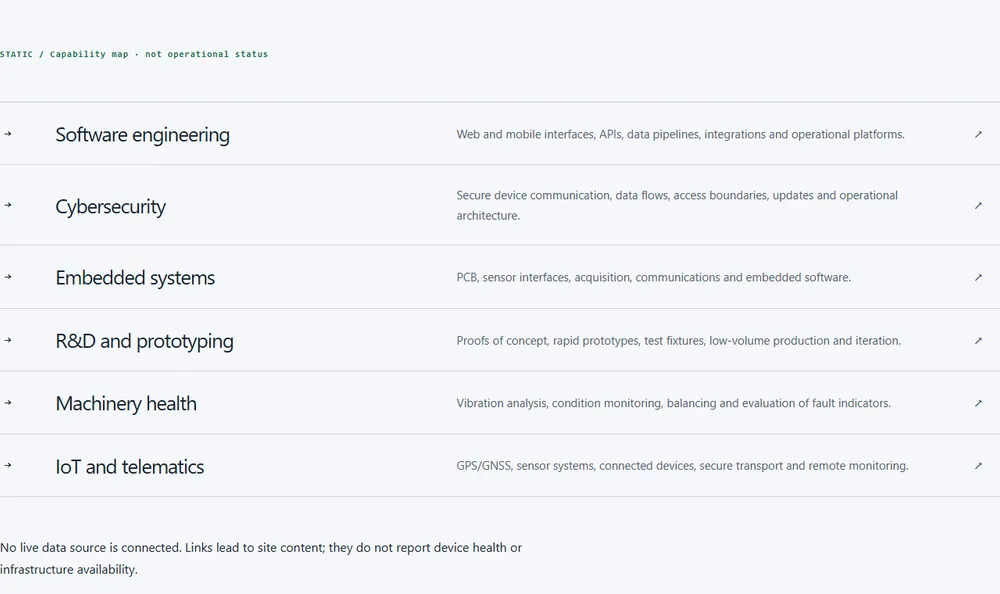
Shows the six engineering disciplines, the data sources and the path a signal takes from sensor to API on one map. It is a capability map, not live operational status.

ROOTCASTLE / ENGINEERING LAB
From the source of a signal to the reasoning behind a decision. Inspect systems, change assumptions and question results.
Shows the six engineering disciplines, the data sources and the path a signal takes from sensor to API on one map. It is a capability map, not live operational status.
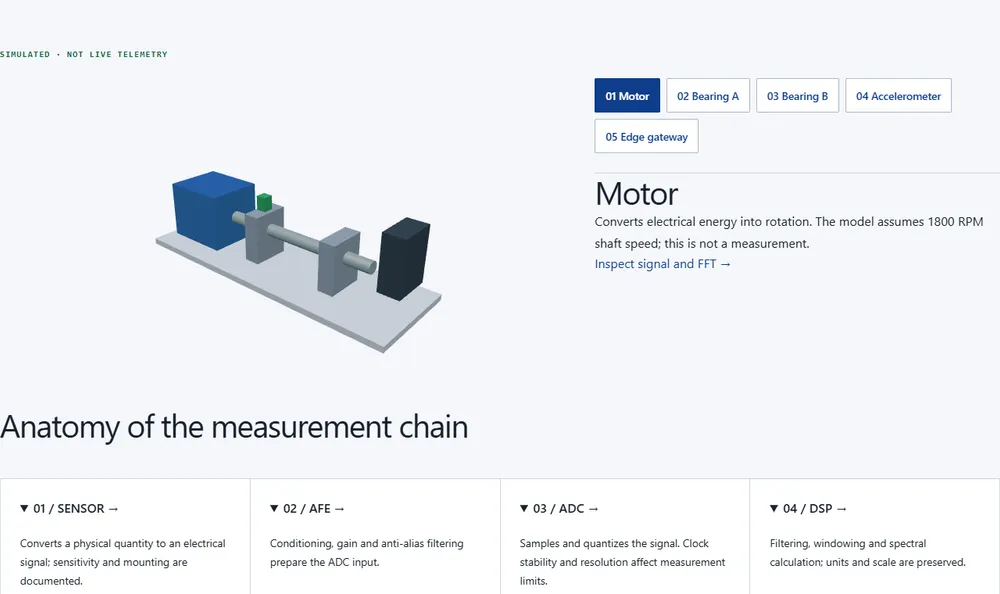
Rotate and explode a procedural industrial control unit in 3D. Read what the sensor, AFE, ADC, DSP, edge device, telemetry and API each do in the measurement chain.
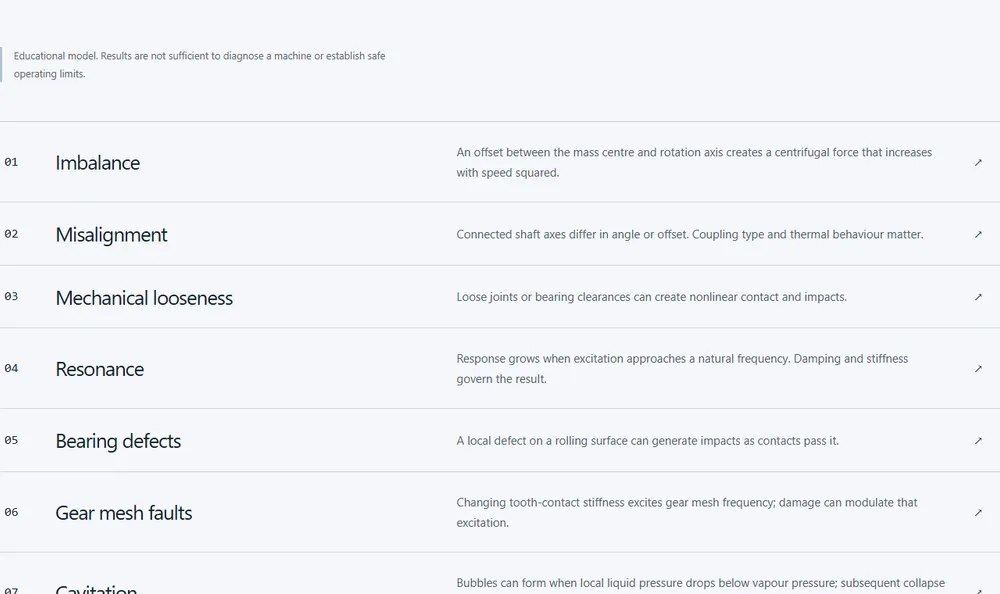
Read imbalance, misalignment, looseness, resonance, bearing, gear and cavitation faults with their definition, symptoms, measurement method, alternative explanations and typical spectral signature.
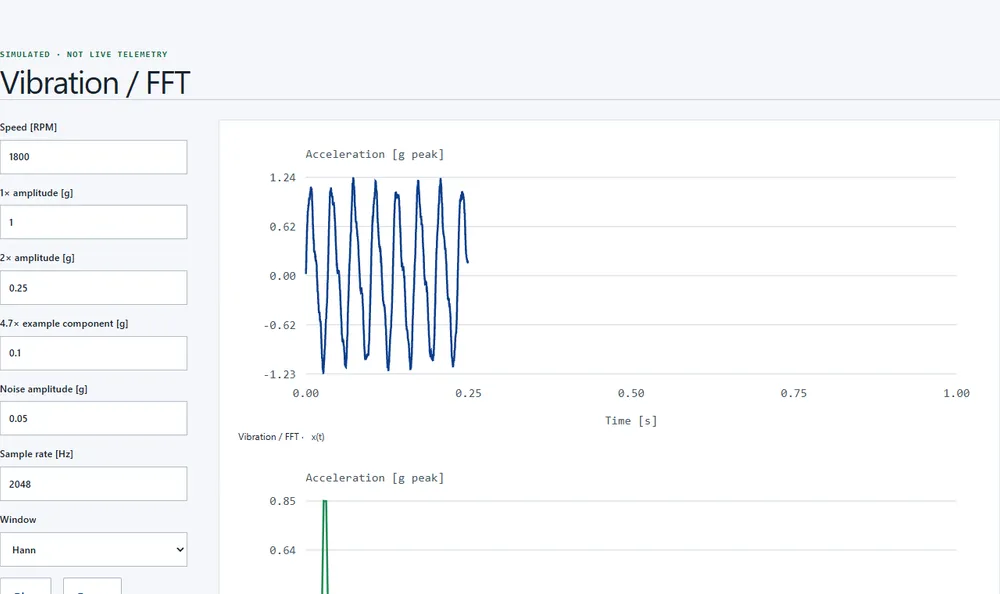
Change speed, harmonic amplitudes, a bearing component, noise, sample rate and window, and compute the time waveform and FFT spectrum of a synthetic vibration signal in the browser.
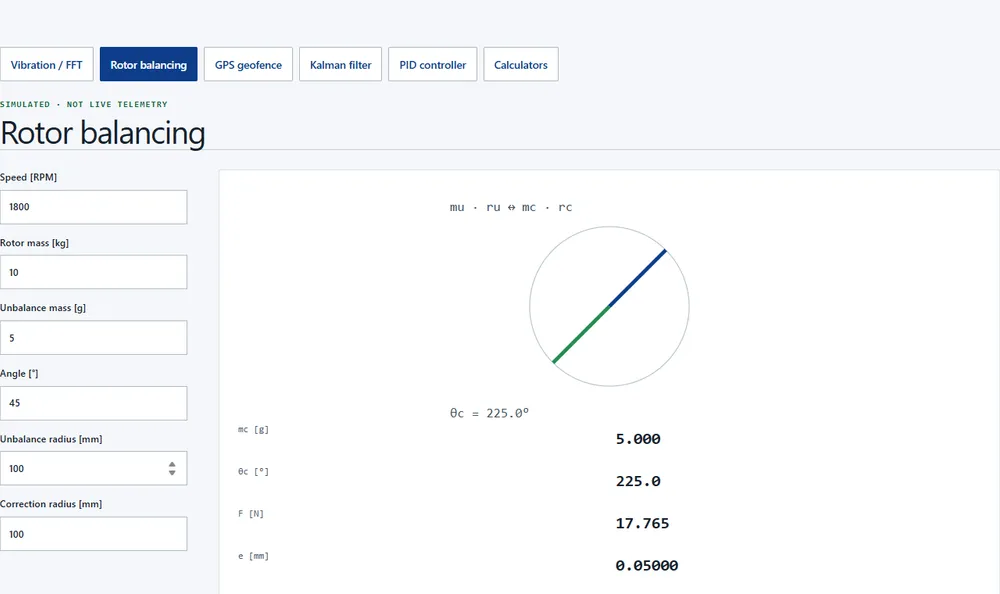
Five interactive experiments: vibration/FFT, rotor balancing, GPS geofence, Kalman filter and PID controller. Change a parameter and see the result on a chart, next to the model assumptions.
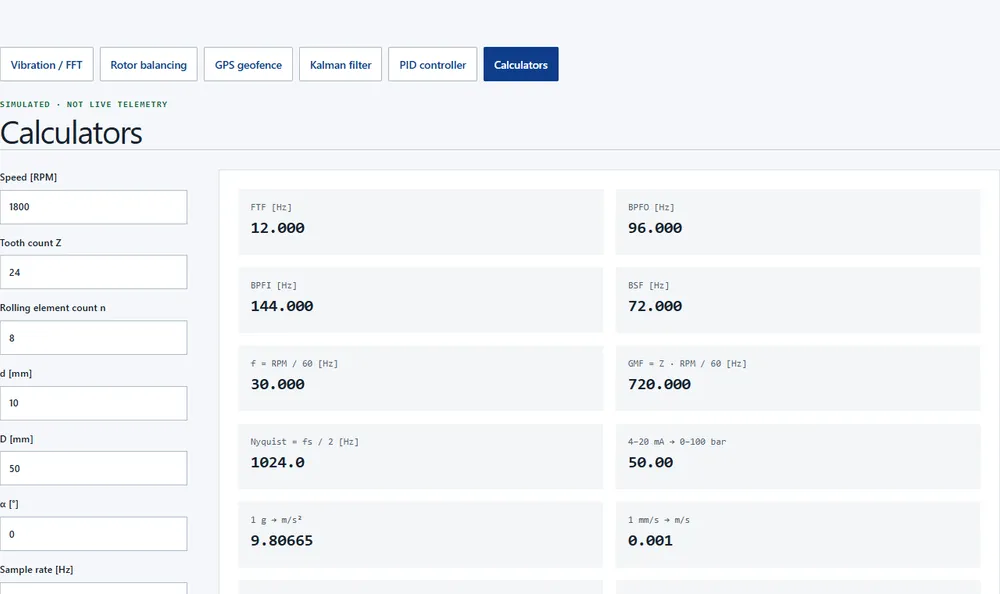
Bearing defect frequencies (FTF, BPFO, BPFI, BSF), gear mesh frequency, the Nyquist limit, 4–20 mA scaling, unit and GPS conversions. Equations and units are shown with every result.
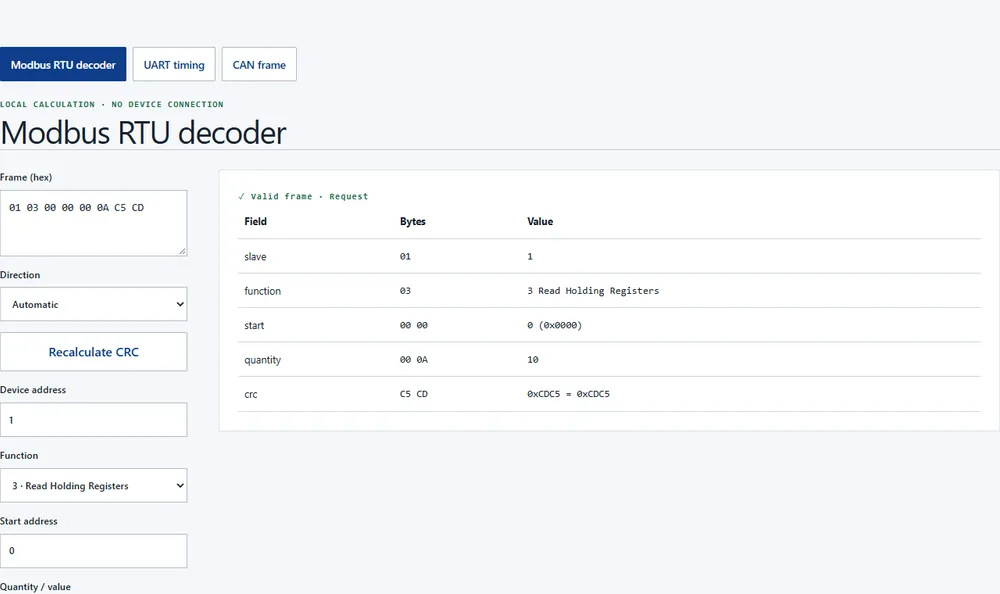
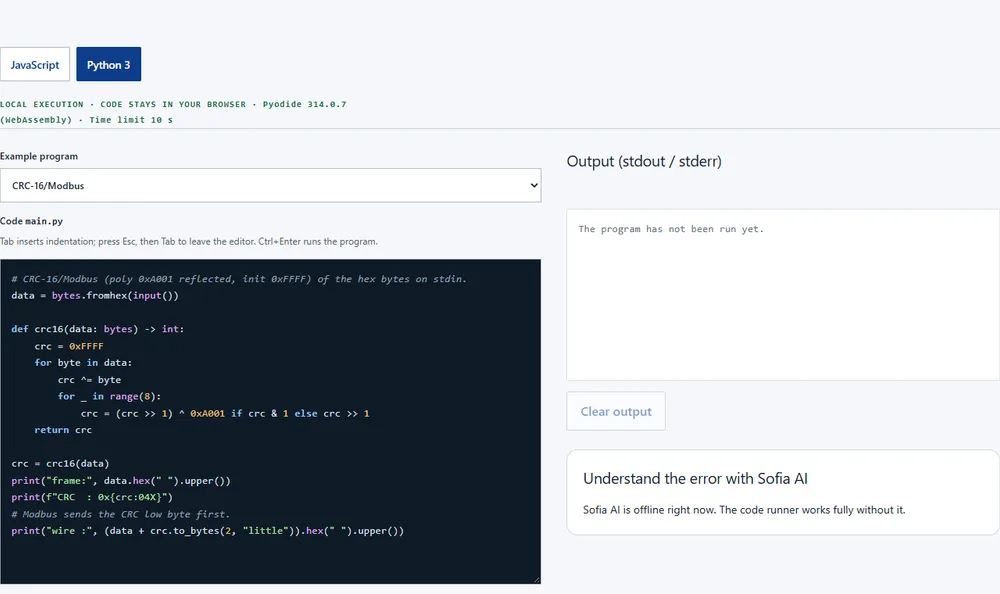
Paste a Modbus RTU frame and read address, function, register values and CRC-16 check field by field. Compute UART character timing and Modbus silent intervals, and see the CRC-15 and bit stuffing of a CAN 2.0 frame.
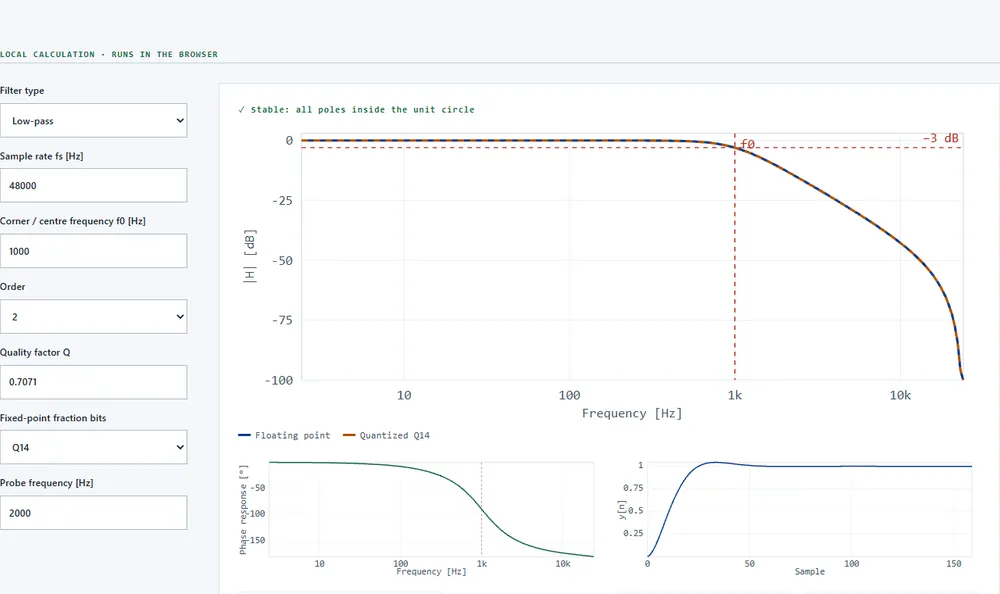
Design low-pass, high-pass, band-pass and notch biquad filters. See the Bode magnitude and phase, the pole-zero plot and the step response, then take fixed-point coefficients and C code ready for a microcontroller.
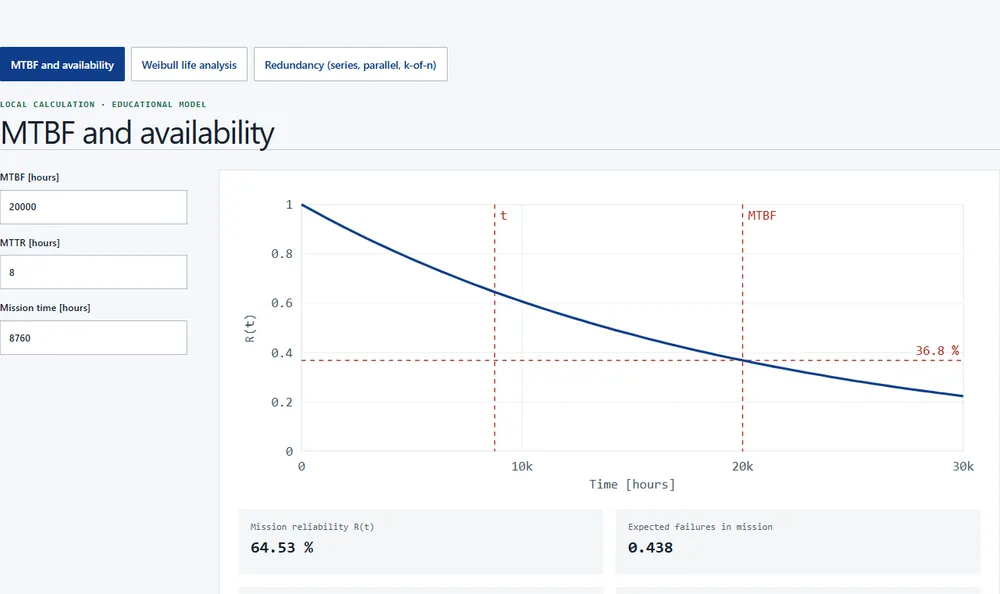
Compute mission reliability, availability and yearly downtime from MTBF and MTTR. Read B10 life and the failure regime from Weibull shape and scale, and compare series, parallel and k-of-n redundancy on one chart.
Run JavaScript and Python in your browser, starting from CRC, PID, sensor-data and vibration-spectrum examples. The code goes to a web worker and WebAssembly in the browser, not to a server; when it fails, ask Sofia AI for an explanation and a fix.
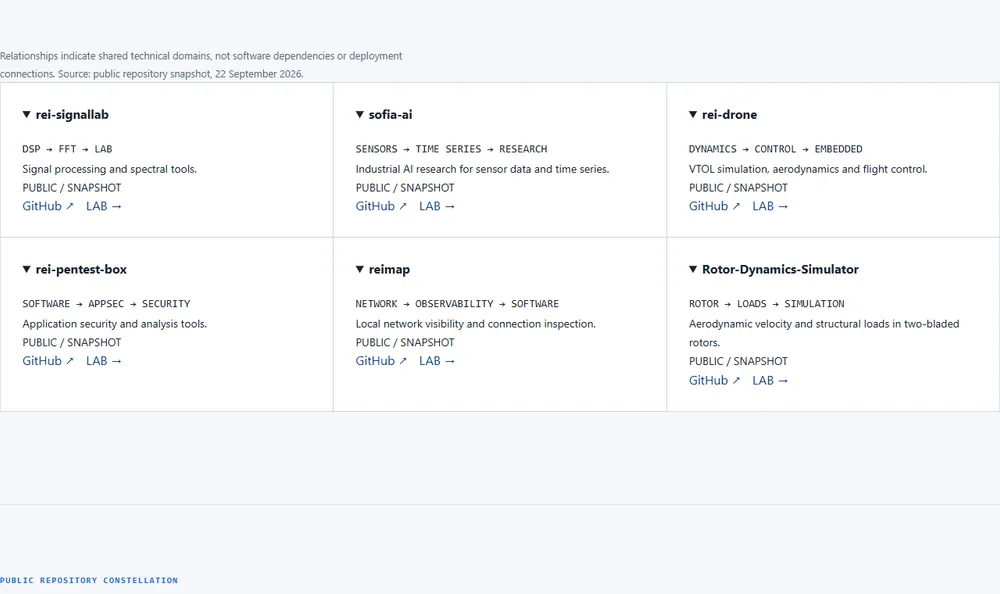
Shows where public Rootcastle projects meet across technical domains. Links mean a shared engineering area, not a software dependency or deployment connection.
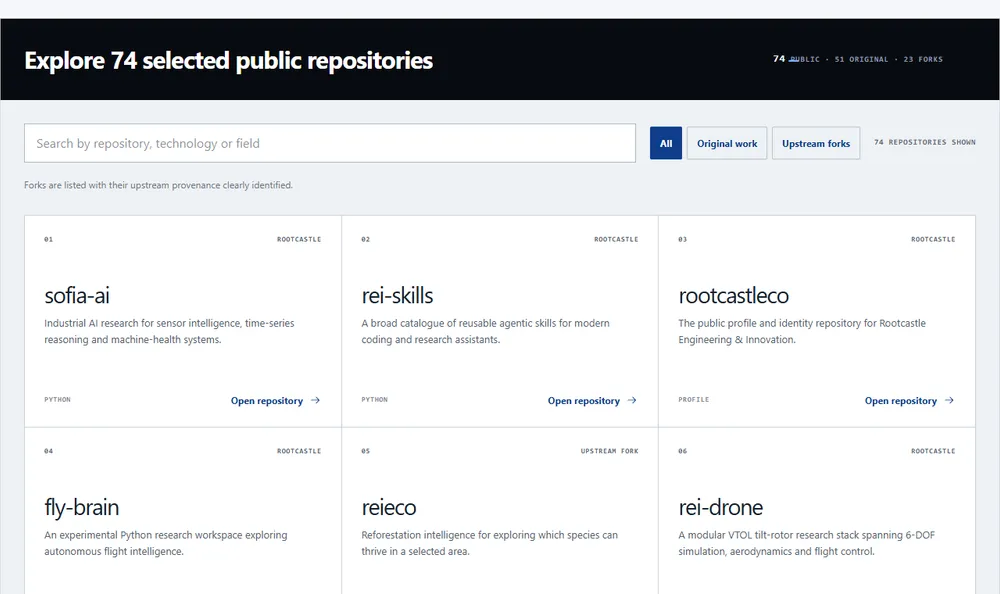
A public repository index stored at build time: search and filter by language, technology and area, then open the source. It still works when GitHub is unreachable.
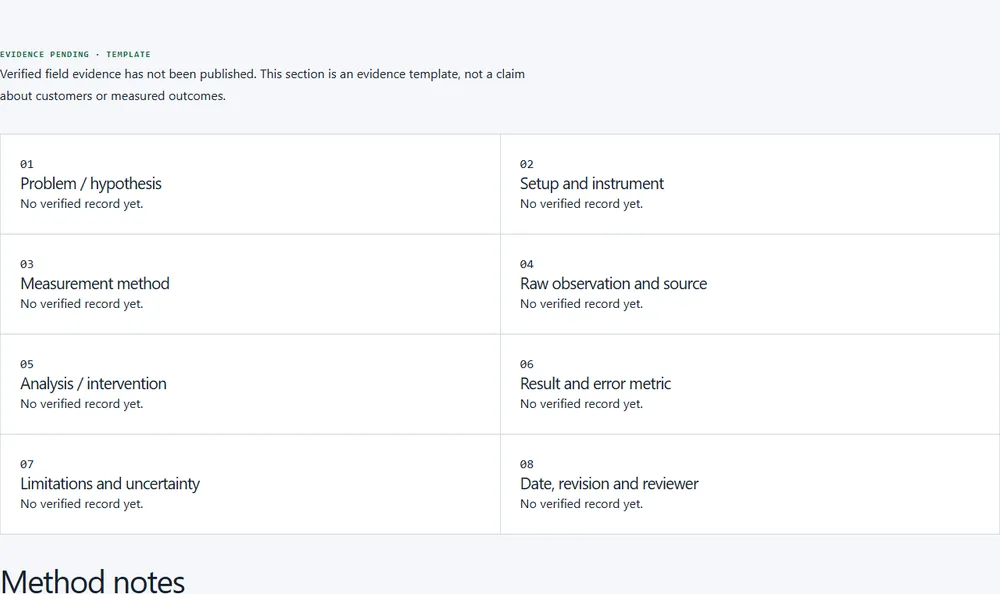
An engineering notebook template that records problem, setup, method, raw observation, analysis and result in one structure. It claims no result until a verified record is published.
A structured record for field measurements with evidence, uncertainty and an error metric. It makes no claim about customers or measured results.
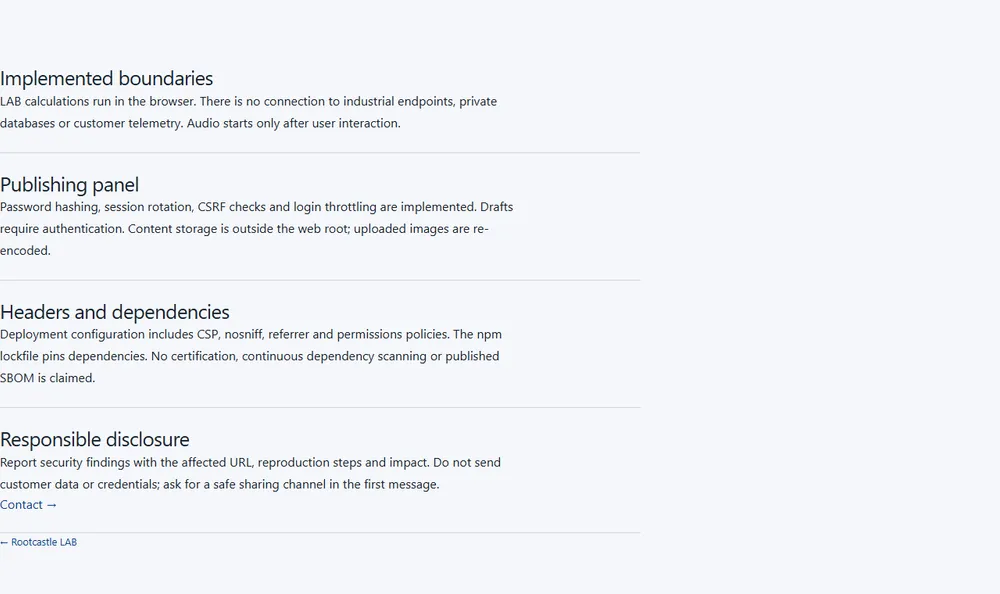
Explains the LAB’s browser boundaries, the publishing panel’s protections, security headers and the responsible-disclosure channel.
Answers grounded in Rootcastle’s published technical content. Open and verify the sources; AI output can contain errors.
Sofia AI · EN · Answers with public sources
Quick access to LAB tools and published sources. This search is local; your input is not sent to a server.